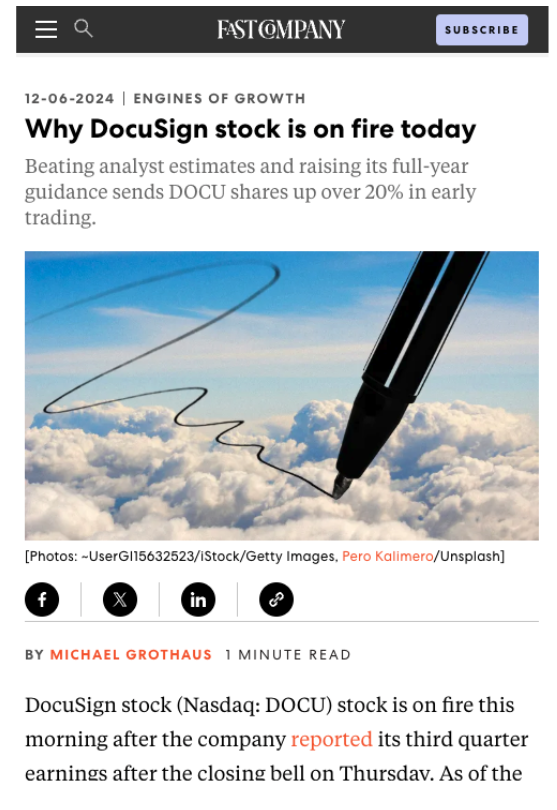
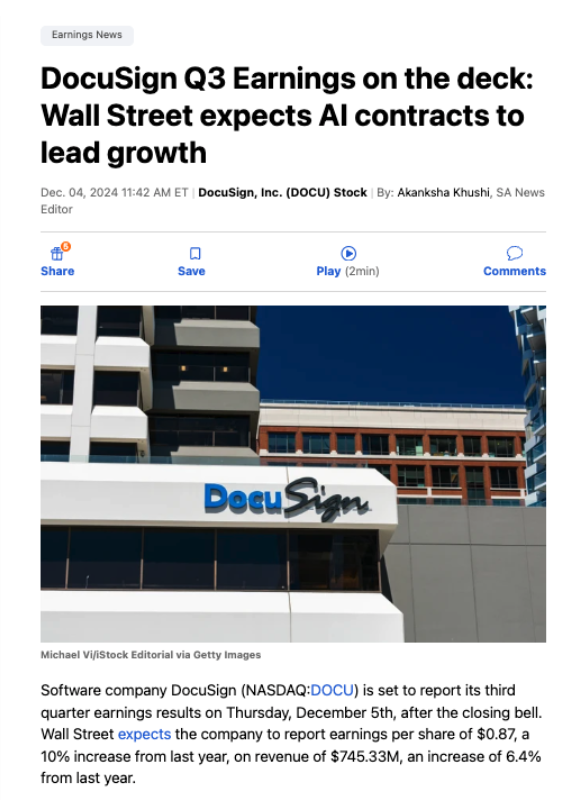
Reigniting Momentum at Docusign
"With Intelligent Agreement Management, we’re leveraging our market leadership in e-signature and CLM to define a broader market opportunity by solving age-old customer problems that have never been addressed. We believe IAM unlocks a new wave of value for customers as the system of record for agreements, and a new phase of growth for Docusign."
Allan Thygesen
CEO Docusign (source is Q1 25 prepared remarks for investors June 9, 2024)

Stage: Public Company
From: Docusign was the market leader in eSignature but it became commoditized and momentum stalled.
To: Launched Intelligent Agreement Management (IAM), a new category of cloud software powered by AI. IAM creates, commits and manages agreements to reclaim the nearly $2 trillion in business value that is lost or delayed every year due to agreement mismanagement.
Outcome: New category potential fueled 50% growth in MCAP following the category launch.
DocuSign was the undisputed king of eSignature.
They defined the category.
They were the verb—the ultimate signal of category domination.
They captured the lion’s share of market cap, revenue, and mindshare.
But by 2022, eSignature had become commoditized.
Microsoft bundled it.
Adobe bundled it.
Startups offered it for free.
Customers saw it as a feature—not a strategy.
Internally, the DocuSign team could feel it.
They were still winning.
But they weren’t leading.
They had two choices:
Stay the kings of a declining category—
Or build belief in something bigger.
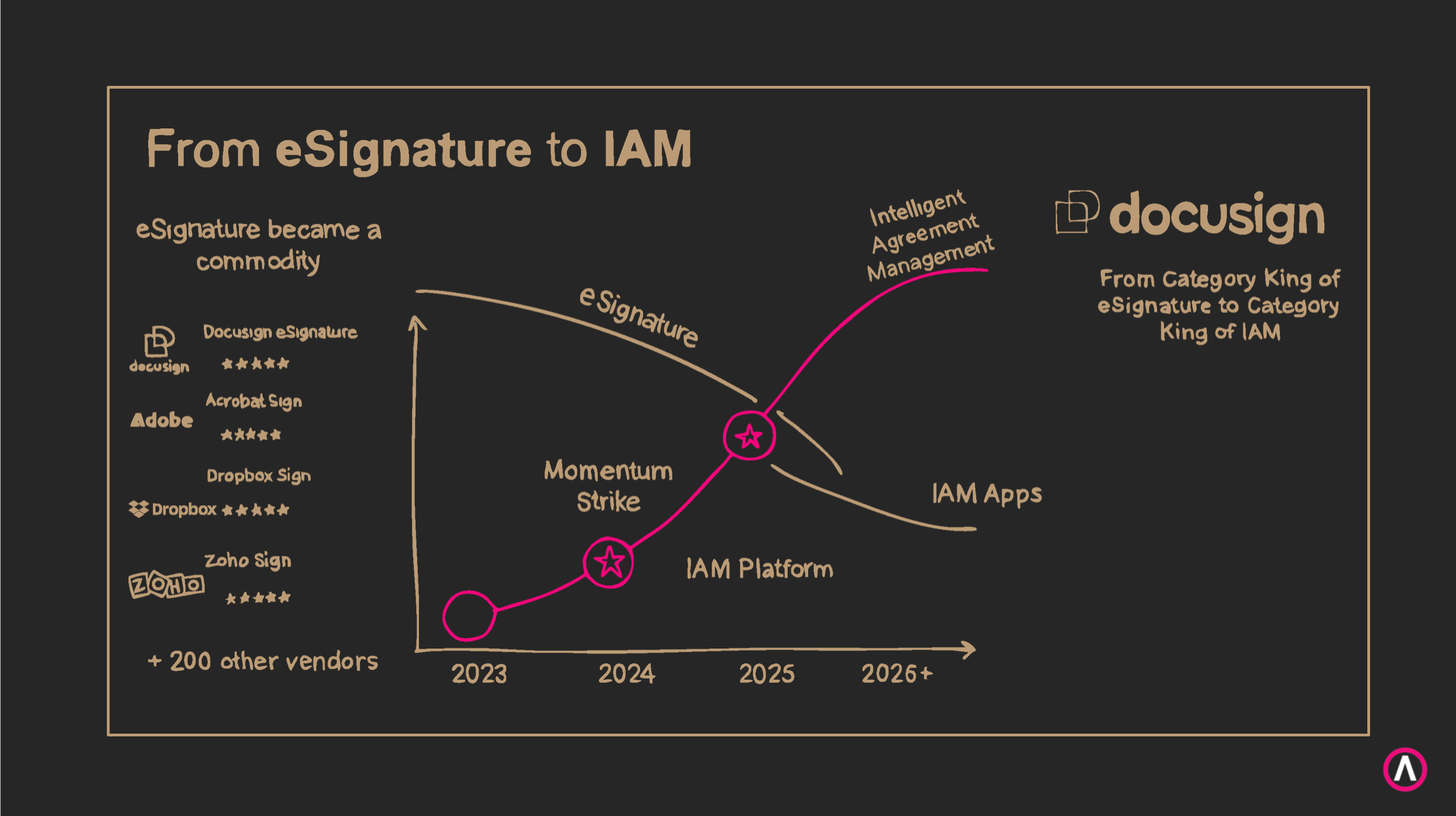
The Breakthrough: INSIGHT + POV + LIGHTNING STRIKE
The Problem
DocuSign realized the category wasn’t broken.
It had just stopped expanding.
There were over 500 competitors doing some version of eSignature.
The real issue wasn’t just signing.
It was everything before—and after—the signature.
Companies were spending billions managing contracts with disconnected tools:
| Redlining in Word
| Negotiating via email
| Filing PDFs in cloud storage
| Manually tracking obligations post-signature
Agreements weren’t dynamic.
They were fragmented.
They were a mess.
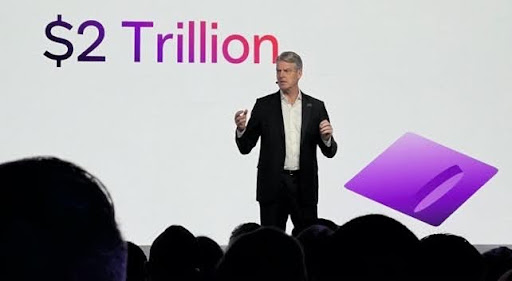
Naming the Villain
DocuSign named the villain: The Agreement Trap.
A world where mission-critical agreements are locked inside static files, disconnected from the systems that run the business.
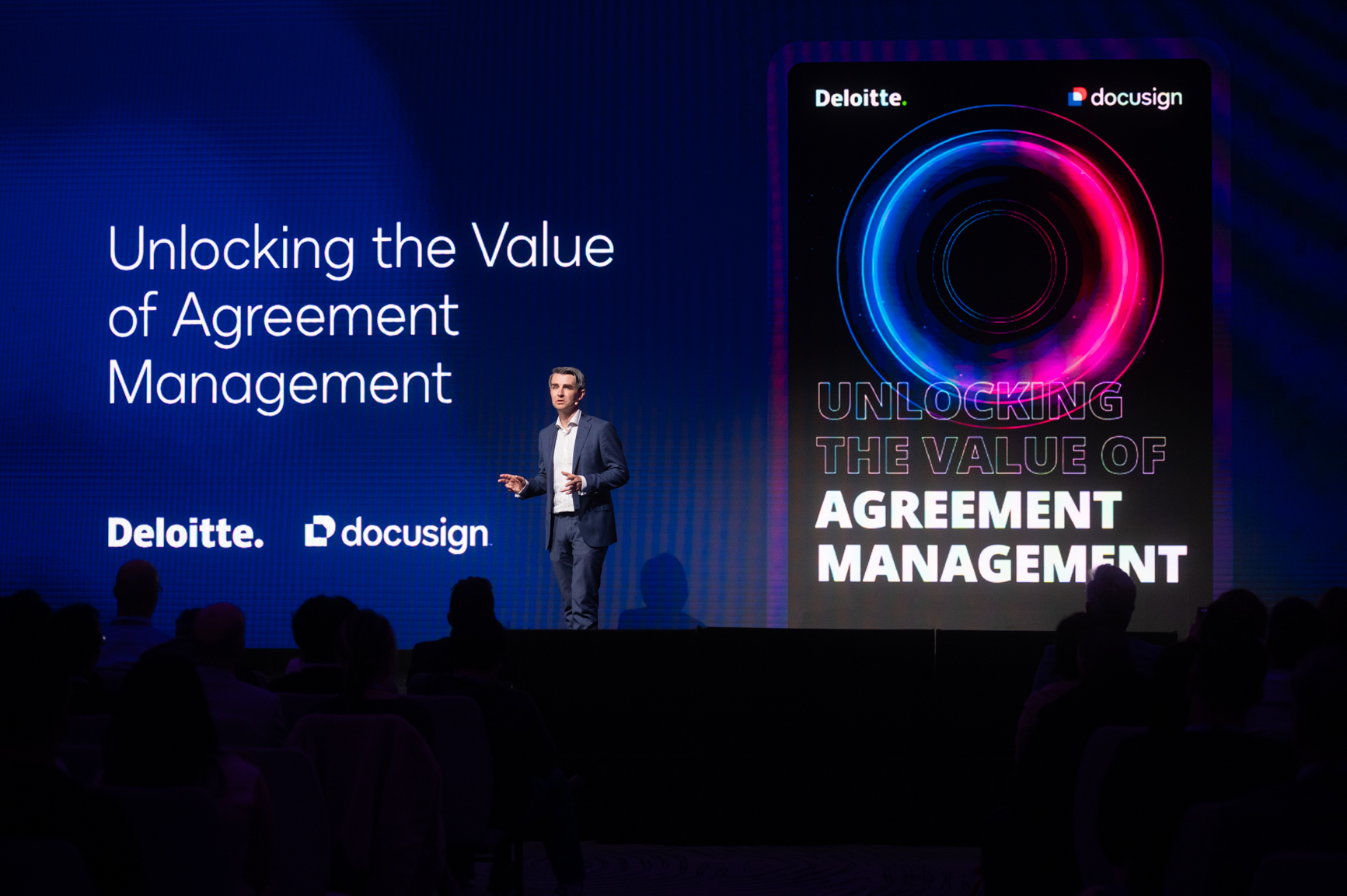
To make the problem undeniable, they commissioned a study with Deloitte.
The results:
| 92% of organizations struggle to extract data from agreements
| 85% don’t track post-signature obligations
| Nearly $2 trillion in business value is lost or delayed every year due to agreement mismanagement
This wasn’t a process problem.
It was a board-level risk.
The villain had a number. And it was massive.

The Decision: Burn the Boats
In early 2024, DocuSign made a decision.
They wouldn’t just evolve their messaging.
They would expand their identity.
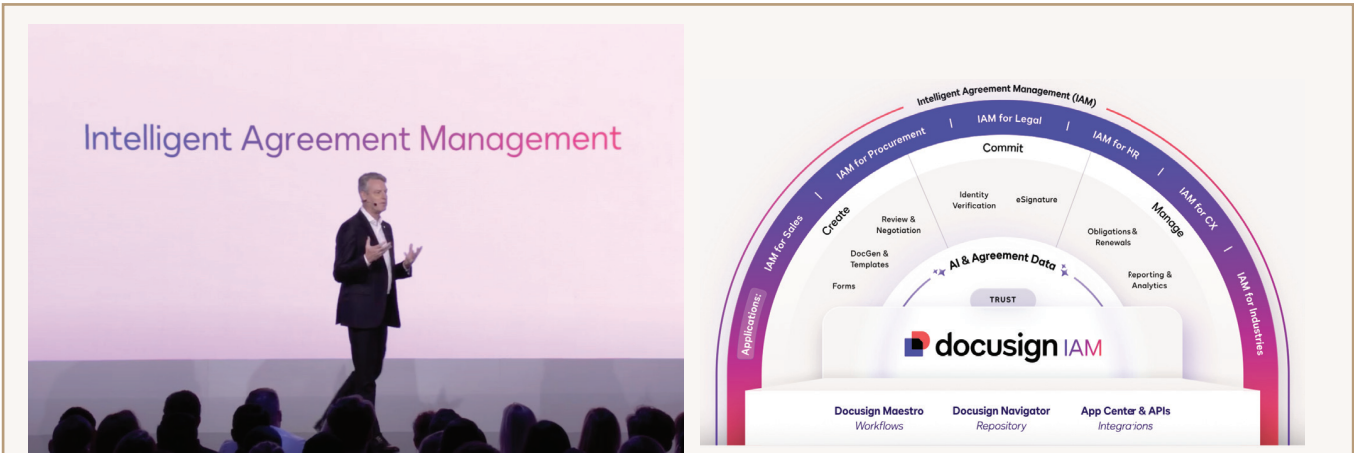
They would define the Intelligent Agreement Management (IAM) category
At a company-wide all-hands, President of Growth, Robert Chatwani, led the Burning of the Boats Ceremony:
“This is the next chapter in our journey.
And there’s no going back.”
The team laid out:
| The problem: Fragmentation and PDFs everywhere
| The villain: The Agreement Trap
| The new category: Intelligent Agreement Management (IAM)
This wasn’t messaging.
It was transformational.
And it was the moment belief moved to the entire organization
The Lightning Strike: Momentum 2024
Investors responded.
A year after the strike, on their earnings call, CEO Allan Thygesen reported that 18% of revenue now comes from IAM.
The stock jumped 16%.
Shares are up over 50% since the first Lightning Strike.